
Chickens have a reputation for eating anything and everything, from worms to kitchen scraps. They're also quick to figure out which treats they like best. But that bottomless-pit reputation hides a real risk: chickens can be overfed, and the extra food usually isn't the kind that's good for them.
Will Chickens Overeat?
On a complete feed, most backyard chickens regulate their own intake well. They eat to meet their energy needs and then stop. Laying hens eat more than non-layers because making an egg takes a lot of energy, but that's normal, not overeating.
The trouble starts with extras. Treats, scratch grains and table scraps are tasty and easy to fill up on, and chickens will happily eat them past the point of need. That's how most backyard flocks end up overfed: too many calories from foods that don't carry the protein, vitamins and minerals in their feed. Meat breeds like the Cornish Cross are the exception. They're bred to eat almost constantly and need their feed managed from the start.
Risks of Overfeeding Your Chickens
Too many treats, scraps and scratch grains can lead to four main problems, and some of them can be fatal.
1. Obesity
Chickens put on weight fast. Overweight hens are more prone to bumblefoot and other foot pad problems from carrying extra weight on their feet. Excess weight also affects reproduction, and heavy hens often lay less.
2. Missing Nutrients and Fatty Liver
Given the choice, chickens eat treats first and fill up before they get to their feed. That leaves gaps in the protein, vitamins and minerals their feed is built to supply. High-calorie, low-nutrient diets also raise the risk of fatty liver hemorrhagic syndrome, a condition in which fat builds up in the liver until it ruptures and bleeds.
3. Kidney and Urinary Problems
A chicken's kidneys filter out extra protein and minerals. When the diet carries far more than the bird needs, especially too much protein or calcium for its life stage, waste builds up faster than the kidneys can clear it. One result is gout, where uric acid crystals collect in the joints (articular gout) or around the internal organs (visceral gout). Signs include swollen joints, lameness and white, chalky droppings. Feeding layer feed to non-laying birds is a common cause, so match the feed to the bird.
4. Egg Problems
More feed doesn't mean better eggs. Overweight hens can lay oversized eggs with thinner shells, and fat around the reproductive tract makes laying harder. That raises the risk of egg binding, where an egg gets stuck in the oviduct, and of blood-streaked eggs. Diets heavy in scratch grains also lower egg production, because grains are low in protein and calcium.
What Should You Feed Chickens?
A complete feed is meant to be your chickens' only source of nutrition. It balances protein, amino acids, vitamins, trace minerals, calcium and phosphorus in one bag, so you don't have to. What changes is the formula, which should match your birds' age and purpose.
|
Feed |
Who it's for |
Protein |
Calcium |
|---|---|---|---|
|
Starter |
Layer-type chicks, hatch to about 6–8 weeks |
18–20% |
Low |
|
Grower |
Pullets from starter until about 14 weeks |
15–16% |
Low |
|
Developer |
Pullets from about 14 weeks until laying |
14–15% |
Low |
|
Layer |
Hens from the first egg (about 18–20 weeks) |
About 16% |
3–4% |
|
Meat-bird starter/grower |
Broilers such as Cornish Cross |
About 22% |
Low |
Many feed brands combine stages into a single starter-grower that runs from hatch to point of lay. Source: Oregon State University Extension, PNW 477.

How Much Should Chickens Eat?
An adult laying hen typically eats about a quarter pound of feed a day. That amount goes up in cold weather and during heavy laying, and down for free-range birds that forage. For a full breakdown by breed, season and life stage, see our guide on how much to feed chickens per day.
The simplest way to avoid overfeeding is to cap the extras. Keep treats, scratch and scraps to about 10% of what your hens eat. Oregon State University Extension suggests giving no more supplements than the flock can clean up in about 20 minutes, which works out to roughly 10% to 15% of the diet (PNW 477). Give treats in the afternoon, after hens have filled up on their feed.
Free-Choice Feeding vs. Timed Meals
Both methods work. The right one depends on your schedule, your setup and how much feed you're willing to lose to pests.
|
Method |
How it works |
Pros |
Cons |
Best for |
|---|---|---|---|---|
|
Free choice |
A feeder stays full all day; hens eat when they want |
Hens self-regulate; less daily work; lower-ranked hens get a fair chance to eat |
Attracts rodents and wild birds; more spilled and wasted feed; harder to spot a hen that's off her food |
Most backyard layer flocks |
|
Timed meals |
Feed set out twice a day, enough for about 30–60 minutes each |
Less waste and fewer pests; easy to track how much the flock eats; good for spotting sick birds |
Takes daily time; dominant hens may crowd out others; risk of underfeeding layers |
Meat birds, flocks with pest problems, owners home morning and evening |
With either method, make sure feed is available in the late afternoon. Chickens don't eat after dark, and hens need a full crop going into the night.

Shop Our Organic Chicken Feeds
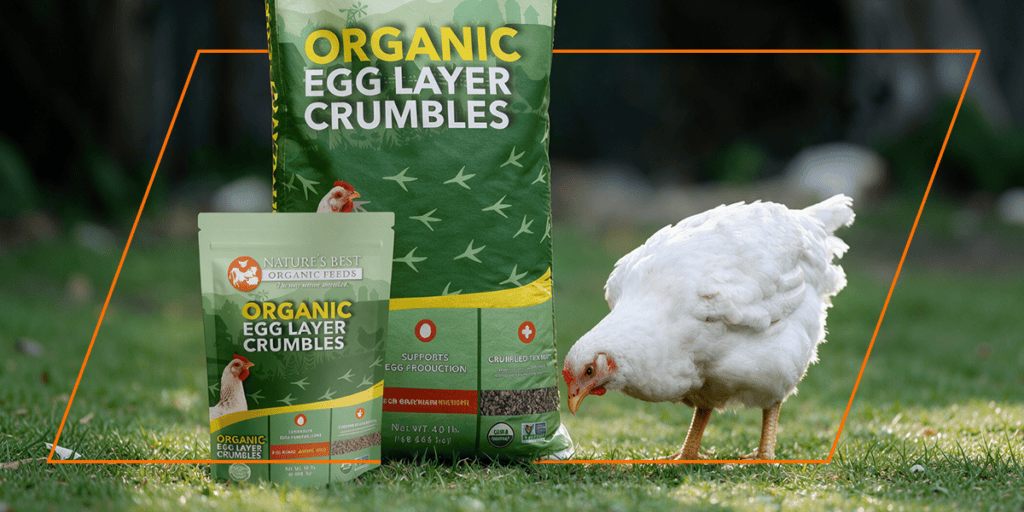
Nature's Best Organic Feeds comes from a family-owned and operated company in business since 1947, with organic, non-medicated, Non-GMO Project Verified formulas for every life stage. Keep your flock healthy and well fed. Use our store locator to find our feeds at a Tractor Supply Co. or feed store near you.