
Baby chicks will peck at almost anything, but not everything is good for them, and timing matters as much as the food itself. Here's what chicks need, which treats are safe and from what age, and which foods to keep out of the brooder entirely.
Essential Nutrients for Baby Chicks
Chicks grow fast, so they need a more concentrated diet than adult hens.
- Protein: Chick starter should contain about 18% to 20% protein to build muscle, feathers and bone. Protein steps down to about 16% once pullets reach laying age, around 18 to 20 weeks.
- Vitamins: Chickens need both fat-soluble vitamins (A, D, E and K) and B vitamins such as thiamine, riboflavin, niacin, folic acid and biotin. Unlike people, they make their own vitamin C.
- Minerals: Calcium and phosphorus build bone, and smaller amounts of zinc, manganese, iron, copper and iodine support growth. Chicks need far less calcium than laying hens.
- Energy: Grains like corn and wheat supply most of a chick's energy. Soybean meal, a protein source rather than a grain, adds protein.
- Fats: Fats add energy and supply linoleic acid, an essential fatty acid. They also help chicks absorb fat-soluble vitamins.
- Water: Chicks need clean, fresh water at all times. They drink more than they eat by weight, and intake rises in warm weather.
Start With a Complete Chick Starter
A complete chick starter should make up the whole diet for the first 3 to 4 weeks, and at least 90% of it after that. It's the only way to be sure chicks get every nutrient above in the right amounts, which kitchen foods can't guarantee.
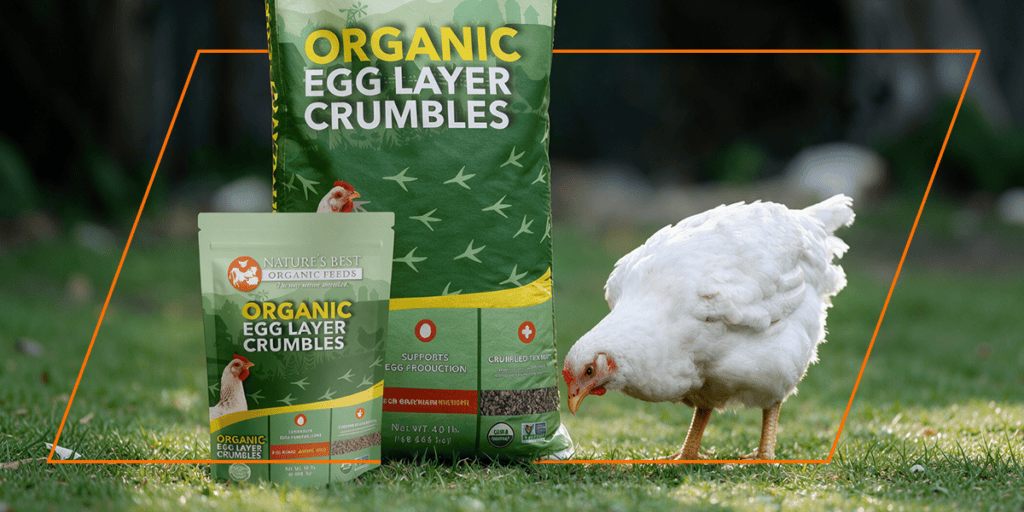
Organic chick starter is made with certified organic grains and soybean meal, plus added vitamins and minerals such as calcium, zinc, copper, iodine and vitamins A, D3, E and B12. It's non-medicated and made without GMO ingredients. Our Organic Chick Starter-Grower Crumbles come in a crumble sized for small beaks.

Safe Treats for Baby Chicks
Wait until chicks are about 3 to 4 weeks old before offering treats, and keep treats under 10% of what they eat. Start with chick-size grit the same day you introduce anything other than starter, so chicks can grind fibrous foods. Introduce one new food at a time in small, chopped pieces.
|
Treat |
From what age |
Grit needed? |
Notes |
|---|---|---|---|
|
Mealworms and red worms |
3–4 weeks |
Yes |
High-protein; a few per chick, chopped at first |
|
Crickets and small insects |
3–4 weeks |
Yes |
Small live or dried insects encourage foraging |
|
Leafy greens (romaine, kale, chard, turnip greens) |
3–4 weeks |
Yes |
Chop finely; skip iceberg lettuce, which has little nutrition and can loosen droppings |
|
Grass and clover |
3–4 weeks |
Yes |
Short, tender clippings only; long blades can cause crop impaction |
|
Plain oatmeal (cooked or rolled) |
3–4 weeks |
Yes for raw oats |
Plain only; no sugar, salt or flavorings |
|
Strawberries |
4 weeks |
Yes |
Chop small; high in sugar, so offer sparingly |
|
Apples |
4 weeks |
Yes |
Remove seeds and core; chop small or offer unsweetened applesauce |
|
Ripe bananas |
4 weeks |
No |
Mash or chop; high in sugar, so offer sparingly |
|
Watermelon (flesh only) |
4 weeks |
No |
Good on hot days; remove seeds and rind |
|
Ripe tomatoes (fruit only) |
4 weeks |
No |
Never the leaves, stems or green fruit, which contain solanine |
For the full week-by-week plan, see things you need to know about feeding baby chicks.
Foods Baby Chicks Should Never Eat
Keep these out of the brooder and run:
- Dried or raw beans: They contain a compound (phytohemagglutinin) that is toxic to chickens of any age. Only fully soaked and cooked beans are safe, and they aren't needed for chicks.
- Onions: Their sulfur compounds can damage red blood cells.
- Chocolate: Theobromine and caffeine are toxic to chickens, and darker chocolate is more dangerous.
- Avocado skin and pits: These contain persin, which is toxic to birds. Skip avocado entirely for chicks.
- Eggplant, tomato and potato leaves, stems and green parts: These contain solanine.
- Rhubarb leaves: High in oxalic acid, which is toxic.
- Peanut shells: Tough and hard to digest; plain, unsalted nuts are fine in small amounts for adult birds.
- Salty or pickled foods: Pickles, chips and other salty foods are harmful in large amounts and have no place in a chick's diet.
- Moldy or spoiled food: Never feed anything moldy, including bread. Some molds produce toxins that can make chickens seriously ill.
If a chick eats something toxic and shows signs of illness, separate it, keep it warm, offer water with poultry electrolytes and contact a vet.
How Much Should You Feed Baby Chicks?
Keep starter available at all times and let chicks eat as much as they want. They regulate their own intake well. Plan on roughly 10 to 12 pounds of starter per chick from hatch to 8 weeks for standard-size breeds.
|
Age |
Daily feed per chick (approx.) |
|---|---|
|
Week 1 |
0.3–0.5 oz (10–15 g) |
|
Weeks 2–3 |
0.5–1 oz (15–28 g) |
|
Weeks 4–5 |
1–1.5 oz (28–42 g) |
|
Weeks 6–8 |
1.5–2.2 oz (42–60 g) |
Bantams eat less and heavy breeds a little more. Raise chicks apart from adult birds until they're at least 8 weeks old and close in size, since older hens may bully chicks away from the feeder.
What to Do If a Chick Isn't Eating or Drinking
Chicks can live on their yolk reserve during shipping, but they should start eating and drinking soon after they arrive. If one seems weak or uninterested, check these three things first.
- Warmth: A chilled chick won't eat. Start the brooder at 90–95°F (32–35°C) under the heat source in week one, then lower it about 5°F (3°C) each week until chicks are fully feathered at around 6 weeks. Watch their behavior: chicks huddled under the heat are cold, and chicks panting at the edges are too hot.
- Pasty butt: Check vents daily in the first week. Dried droppings can seal the vent and stop a chick from eating. Soften the mess with warm water and gently wipe it clean.
- Water: Keep clean, room-temperature water available at all times. Gently dip a weak chick's beak into the water to show it where to drink. A poultry electrolyte or vitamin supplement in the water can help a weak chick recover.
If a chick still won't eat or drink within a day, separate it and contact a vet or your local extension office.
How to Choose a Chick Feed
Chick starter usually comes as a crumble, sized for small beaks. Homemade mixes can't match the measured nutrient levels in a formulated starter, so choose a complete feed and check the tag for:
- 18% to 20% protein for chicks from hatch to about 8 weeks
- Low calcium (about 1%), since layer-level calcium can damage young kidneys
- Medicated or non-medicated, depending on whether your chicks are vaccinated and whether you're raising an organic flock (see medicated vs. unmedicated chick starter)
- A recent milling date, since vitamins break down over time
Certified organic starter adds a few more assurances. It's made from organically grown grains, without synthetic pesticides, GMO ingredients, antibiotics or medications.

Shop Organic Chick Starter at Nature's Best Organic Feeds
Nature's Best Organic Feeds comes from a family-owned and operated company in business since 1947. Our Organic Chick Starter-Grower Crumbles give your chicks complete, non-medicated nutrition from day one. Use our store locator to find them at your nearest Tractor Supply Co.